
MoboDrama - AI Comic Dramas
Moboreader Technology USA Co LtdEntertainment
4.4286.00 Reviews
- Version
- 1.9.7
- Installs
- 100.00K
- Age Rating
- Teen
Screenshots
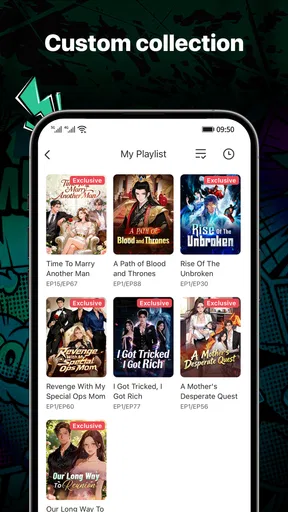
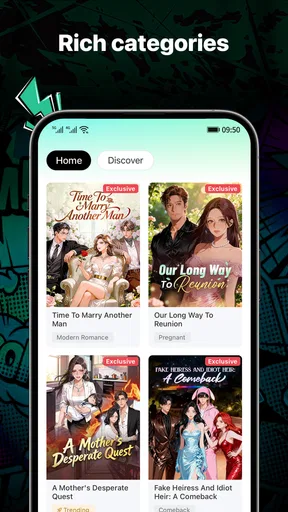
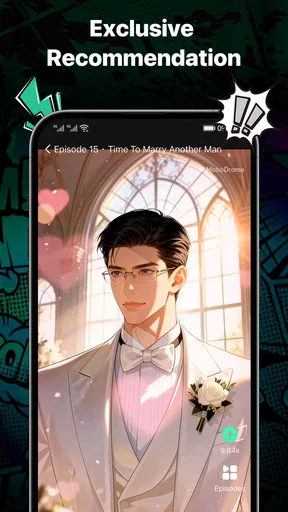
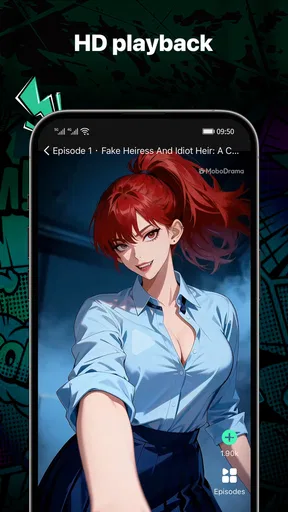
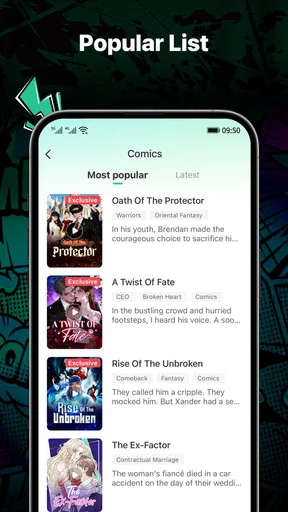
Our Review of MoboDrama - AI Comic Dramas
 Analysis by Appyee
I spent time with MoboDrama as an entertainment app built around short, AI-created dramas rather than conventional long-form television. Its central appeal is easy to understand: instead of committing to a full episode or searching through a large streaming library, I could open the app and move quickly into compact stories shaped by familiar high-concept themes such as systems, reincarnation, and apocalypse. That focus gives it a very different rhythm from Netflix-style viewing or a traditional comic reader.
My overall impression is that this is best treated as a quick, serial storytelling companion. It is free to install, aimed at Teen users, and developed by Moboreader Technology USA Co Ltd. The app sits in the Entertainment category, with a 4.4 average from over eight hundred ratings and more than one hundred thousand installs. Those figures suggest that it has already found an audience, but they do not change the most important question: whether its fast, AI-driven format matches the way you like to spend spare minutes.
Why the AI short-drama format matters
The defining capability is not simply that the stories are short. It is the way the app uses AI-themed storytelling to keep the experience moving through dramatic premises that can be understood quickly. A system-based story can place its character inside a set of rules or challenges. A reincarnation story can begin with an immediate second chance. An apocalypse story can create pressure from the opening scene. These are efficient narrative engines, and they suit a phone screen where I may only have a few minutes before putting the device away.
That efficiency changes how I choose something to watch. With a usual streaming service, I often spend longer browsing thumbnails, checking episode lengths, or deciding whether a series deserves a serious commitment. Here, the premise does more of the work. The themes act like a shortcut: if I am in the mood for escalating survival problems or dramatic second-life twists, I can make a decision without needing a detailed understanding of the entire catalogue.
The real strength is low-commitment discovery. MoboDrama does not need to replace a full television service to be useful. Its value appears when I want a story with a clear hook, a brisk pace, and enough continuation to make the next short viewing session tempting. That makes it particularly suitable for waiting rooms, public transport, lunch breaks, or the few minutes before sleep when a long episode feels like too much.
There is also a useful distinction between this format and ordinary short videos. A random social feed is designed around constant novelty, while a short drama still asks me to follow characters and consequences. The experience therefore sits between scrolling and committed viewing. I can consume it in fragments, but the recurring dramatic structure gives those fragments more purpose than unrelated clips.
What the themes do to the viewing experience
The system, reincarnation, and apocalypse themes are not interchangeable decorations. Each one creates a different reason to continue. System stories tend to encourage curiosity about the next rule, reward, or obstacle. Reincarnation stories rely on the tension between past knowledge and a changed opportunity. Apocalypse stories make time and resources feel urgent. When these ideas are handled well, the short format becomes an advantage because every scene can push toward a decision.
That also means the app will appeal more to readers and viewers who enjoy strong premises than to people looking for quiet, realistic character studies. I would not choose it when I want a slow mystery with lots of atmosphere or a carefully developed ensemble drama. The attraction is immediacy. If I need a story to explain its situation quickly and keep presenting reasons to continue, this format makes sense.
The app’s store summary emphasizes daily new material, which points to another practical benefit: the experience is designed to feel ongoing rather than finished after a single visit. For me, that makes it easier to build a small routine around the app. I can check in when I have a spare moment and see whether a new installment or story direction gives me a reason to stay. The trade-off is that a continuing feed can encourage browsing when I intended to watch only one short segment.
How I would use it in practice
My preferred approach is to choose one theme before opening a story and give it a focused trial rather than jumping between every available option. If I am interested in reincarnation, I stay with that kind of premise long enough to understand the setup and the main character’s motivation. This avoids a common problem with short-form entertainment: mistaking the first few seconds of several stories for a satisfying viewing session.
The short-drama design works best when I treat each visit as a small chapter in a larger routine. I might watch during a commute, stop when I reach my destination, and return later without expecting to remember every visual detail. That is different from watching a film, where interruptions can damage the experience. MoboDrama’s compact structure makes interruptions less disruptive, although the emotional payoff may also feel smaller than the one I get from a long, polished production.
A useful workflow is to reserve the app for predictable gaps in the day instead of opening it whenever I am bored. For example, I could use it during a coffee break, watch a single story segment, and close the app before the session turns into unplanned scrolling. This is a small habit, but it matters because serial entertainment is designed to make “one more” feel effortless. The app is more enjoyable when I decide in advance whether I have time for a brief visit or a longer binge.
Another practical point is to judge a story by its premise and continuation together. A dramatic opening can be effective but still fail to sustain interest. I pay attention to whether each new section adds a meaningful complication or merely repeats the same danger with slightly different wording. That is especially important in system and apocalypse stories, where the initial rules can be exciting but may become predictable if the consequences do not evolve.
What I would expect from the interface and content flow
I approached the app as a discovery tool rather than a personal media archive. That mindset helps because the main pleasure is finding a hook that works for me today, not building a permanent collection of carefully chosen shows. The experience is likely to be most satisfying for someone comfortable sampling several dramatic premises and abandoning the ones that do not create enough curiosity.
The AI element also affects expectations. AI-generated or AI-assisted storytelling can produce unusual combinations of familiar ideas, but it may not deliver the same consistency as a drama made by a large writing and production team. I look for momentum, clarity, and a reason to continue rather than expecting every character beat to feel perfectly natural. When a scene feels compressed or a transition seems abrupt, I see that as part of the format’s limitation rather than a reason to judge it by the standards of premium television.
Because the app is rated for Teens, I would still make a personal judgment about suitability rather than assuming the label answers every family question. Theme-based stories involving danger, reincarnation, or apocalyptic situations can affect viewers differently. A parent deciding whether a younger teenager should use it may want to watch alongside them initially, especially if the child is sensitive to intense fictional situations.
The current version is 1.9.7, and the minimum requirement is Android 6.0. That makes the app approachable for people using older Android devices, at least from an operating-system perspective. I would still keep expectations realistic on an aging phone: short-form video and image-heavy storytelling can feel less comfortable on a small or slower screen than on a recent device. The app’s concept is mobile-friendly, but the quality of an individual session depends on the handset as much as the premise.
The best everyday scenario for MoboDrama
The clearest use case for me is a fragmented day. Imagine having ten minutes before an appointment, then another short break later, with no desire to start a forty-minute episode. I could open a system drama, follow the immediate challenge, stop when the appointment begins, and return later for the next turn. The story’s continuing hook gives the break a little structure without demanding the concentration of a full movie.
It also works for someone who likes to discuss dramatic premises with friends. A reincarnation setup or an apocalypse dilemma can be understood quickly enough to share in conversation, and the short format makes it easier to recommend a particular story without asking a friend to make a large time investment. I would describe the central hook first, then let the other person decide whether the tone suits them.
Another strong scenario is travel without a fixed viewing plan. On a train or while waiting at an airport, I may want something more involving than social media but less demanding than a novel. The app fills that middle space. It gives me a narrative thread to follow while accepting that the trip may interrupt me repeatedly.
However, I would not make it my first choice for a shared family viewing night, a serious television discussion, or a carefully planned movie evening. The short AI-drama format is personal and flexible, but it may not provide the visual polish, emotional depth, or predictable runtime that group viewing often needs. For those occasions, a conventional streaming platform or a complete film is usually better.
Where the trade-offs become noticeable
The first trade-off is depth versus speed. A short drama can establish conflict quickly, but it has less room for subtle relationships, gradual world-building, and quiet scenes that reveal personality. I enjoy the immediate hooks, yet I also notice when a character’s decision seems to happen because the plot needs another turn. If your favorite part of storytelling is watching motivations develop slowly, this app may feel thin.
The second is consistency. AI-centered storytelling can be inventive, but invention is not the same as control. Some premises may feel fresh because they combine familiar ideas in an unexpected way; others may feel like variations on themes I have already seen. I recommend approaching the catalogue with a sampling mindset. Do not assume that one weak story represents the whole app, but do not assume that every dramatic opening will lead to a satisfying continuation either.
The third trade-off involves the free model. MoboDrama is free to use as an app, but it includes in-app purchases ranging from $0.99 to $199.99 per item. That is a wide range, so I would be careful before tapping any purchase-related option during an enthusiastic binge. I prefer to decide beforehand whether I am willing to spend anything, keep track of what unlocks are being offered, and avoid treating a cliffhanger as a reason to buy immediately.
This matters because serialized entertainment naturally creates pressure at stopping points. If a story ends on a question, I may feel that paying is the quickest way to continue. The sensible approach is to separate the quality of the story from the urgency of the moment. If I would not normally pay for that type of content, I should not let a cliffhanger make the decision for me.
There is also a difference between “new daily” content and content that deserves daily attention. Fresh material can make the app feel alive, but it can also turn entertainment into a habit of checking rather than a deliberate choice. I would turn to it when I genuinely want a compact drama, not simply because a notification or a new item appears.
Finally, the app’s focus may feel narrow if I want broad entertainment variety. It is not the place I would go for documentaries, live events, traditional novels, or a large mix of unrelated genres. Its identity is strongest when I am specifically in the mood for high-concept short drama. That specialization is a benefit for the right viewer and a limitation for anyone looking for one app to cover every kind of entertainment.
Who gets the most from this app
I think the best match is a viewer who enjoys cliffhangers, alternate-life premises, survival pressure, and stories that get to the point quickly. If you regularly have small gaps in your schedule and want something more narrative than endless scrolling, the format is easy to fit into daily life. It is also a good option for people who like trying new story ideas without committing to a long series from the beginning.
Readers of web fiction may find the themes especially familiar, even if the presentation feels different from sitting down with a full novel. The app is suited to someone who values momentum over literary polish and who enjoys seeing a premise tested through repeated complications. I would recommend it to a friend who says, “Give me a dramatic hook quickly, and I will decide from there.”
It is less suitable for viewers who dislike serialized cliffhangers, want uninterrupted long-form plots, or expect every scene to have the refinement of a major studio production. It is also a poor fit if you are trying to avoid all optional spending in entertainment and know that locked or purchasable content will frustrate you. In that case, a fully free video platform, a library app, or a paid service with a clear subscription model may be easier to manage.
For parents, the Teen rating is an important starting point, but I would still consider the individual child’s tolerance for intense themes. For older Android users, the six-point-zero minimum is reassuring, although I would not confuse compatibility with a guarantee of a smooth experience on every older phone.
Moboreader Technology USA Co Ltd has positioned this app around a very specific kind of mobile entertainment, and that clarity is its biggest advantage. It does not need to imitate a general streaming service. When I want a quick, high-concept story and have only a short window, the AI short-drama approach makes the decision simple. When I want depth, calm pacing, or a polished complete production, I reach for something else.
My recommendation is therefore conditional but positive: try MoboDrama if system, reincarnation, and apocalypse stories already sound appealing, and begin with a clear limit on your viewing time and spending. The app is free to start and has enough thematic focus to make spare minutes feel more engaging. Just keep its strengths and boundaries in view. It is a brisk serial entertainment app, not a replacement for every kind of television, reading, or film experience.
Verdict
Strengths of MoboDrama - AI Comic Dramas
- Short episodes make it easy to enjoy during quick breaks.
- AI-generated visuals give each drama a distinctive comic-book style.
- Large variety of romance, fantasy, and mystery storylines.
- Personalized recommendations help you discover similar dramas.
- Simple interface makes browsing and starting episodes straightforward.
Limitations of MoboDrama - AI Comic Dramas
- Some episodes may feel repetitive or predictable over time.
- Frequent updates or new content may depend on an internet connection.
- AI artwork can occasionally look inconsistent between scenes.
- The free experience may include ads or limited access to episodes.
- Story quality can vary noticeably from one drama to another.
Other Releases by Moboreader Technology USA Co Ltd
View All
MiniDrama: Stream Drama Shorts
Entertainment4.2

MoboReels: Good Reel Short TV
Entertainment4.1

Lera - Webnovels Romance
Books & Reference4.3

ReadNow: Good Novels & Fiction
Books & Reference4.3
Similar Picks in This Category
View All
Google Play Games
Google LLC3.9

Netflix
Netflix, Inc.4.8

YouTube Kids
Google LLC4.2

Disney+
Disney4.4

Prime Video
Amazon Mobile LLC4.7

Steam
Valve Corporation3.2
Frequently Asked Questions
What is MoboDrama - AI Comic Dramas?
MoboDrama - AI Comic Dramas is an entertainment app that presents short, story-driven dramas in a comic-style format. It combines illustrated scenes, dialogue, narration, and AI-assisted storytelling to create episodes designed for quick viewing. The app is aimed at users who enjoy romance, mystery, fantasy, and other dramatic genres without committing to a full-length television series.
Is MoboDrama - AI Comic Dramas free to download and use?
The application can generally be downloaded without an upfront purchase, but access to all episodes or premium content may depend on the app’s monetization system. Some stories may include advertisements, locked chapters, coins, subscriptions, or optional in-app purchases. Before watching extensively, check the store listing and the in-app payment pages carefully so you understand which content is free and what may require payment.
Does MoboDrama require an internet connection?
MoboDrama is primarily designed for online use because it may need to load comic panels, video-like scenes, audio, advertisements, and account-related information from its servers. A stable Wi-Fi or mobile data connection should provide the smoothest experience. Offline availability can vary by title and app version, so users should not assume that every episode can be downloaded for viewing without an internet connection.
What kind of content and stories are available in the app?
The app focuses on short-form dramatic stories presented through illustrated or comic-inspired scenes. Depending on the current catalog, users may find romantic relationships, emotional conflicts, suspense, fantasy elements, family drama, and plot twists. Because the library and recommendations can change, the available genres may differ over time. Some stories may also contain mature themes, so reviewing age ratings and descriptions is advisable.
Is MoboDrama safe and suitable for children?
MoboDrama should be evaluated according to its current age rating, privacy policy, advertising practices, and the content of individual stories. Dramatic apps can include romance, intense emotional situations, suggestive themes, or advertising and purchase prompts that are not appropriate for young children. Parents should review the store information, enable device-level parental controls, and supervise account or payment access before allowing a child to use the application.
